Dog Food Calculator
Dog Food Carbohydrate Calculator
Use this Dog Food Carbohydrate Calculator to estimate the carbohydrate level in your dog’s food from the guaranteed analysis on the label. Whether you feed dry kibble, wet food, or raw food, this calculator helps you understand what’s really in your dog’s bowl.
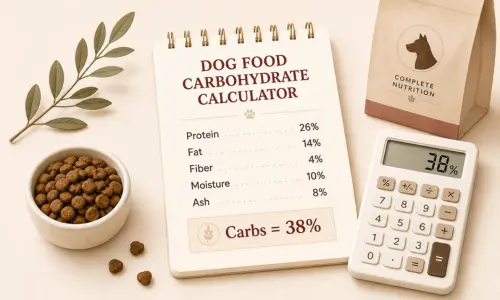
This page helps you estimate how much carbohydrate is in your dog’s food using the guaranteed analysis on the label, with moisture-normalized math and simple explanations.
Calculation type
Carbs by difference
Required inputs
Guaranteed Analysis
Outputs shown
AF + DM Carbs
Best for
Label comparison
On This Page
Carbohydrate Calculator
Enter the values from your label to estimate the nutrient levels on a dry matter basis. This makes the calculation easier to understand and gives you a clearer view of what is actually in the food.
Results
Want to see how real dog food labels are broken down? Browse our dog food reviews for more nutrition details.
How to Use This Dog Food Carbohydrate Calculator
Find the guaranteed analysis
Look for crude protein, crude fat, crude fiber, and moisture on the dog food label. These are the main values needed to calculate carbohydrates in dog food.
Check for ash
Ash represents the mineral content of the food. Some labels list it, while others do not. If ash is missing, the calculator will use default values based on the type of food selected.
Enter the percentages
Add each number as a percentage. Keep the numbers in the same format shown on the label for a cleaner estimate.
Review the result
Use the result as a guide, not a medical rule. It helps you understand the food, but your dog’s overall diet and health still matter most.
Understand the Numbers on a Dog Food Label
When people ask, “How do you calculate the carbohydrates in dog food?”, the answer starts with knowing what each label value means. These numbers work together to estimate the part of the food that may come from carbohydrates.
Protein
Protein supports muscles, tissue repair, and daily body function. It often comes from meat, fish, eggs, meals, legumes, or plant ingredients.
Fat
Fat provides energy and supports skin, coat, and flavor. Higher-fat foods are often more calorie dense.
Fiber
Fiber supports digestion and stool quality. It is technically a carbohydrate, but it is listed separately on the label.
Moisture
Moisture is water content. Wet foods have much more moisture than kibble, which can make their as-fed carb number look lower.
Ash
Ash is the mineral portion of the food. It includes minerals such as calcium, phosphorus, potassium, and magnesium.
Carbohydrates
Carbs may come from grains, potatoes, peas, lentils, vegetables, fruit, or starches used to form kibble.
Why Dog Food Carbs Matter
A better way to compare dog food
Dog food labels can be hard to compare because dry food and wet food contain very different moisture levels. A carbohydrate in food calculator gives you a clearer starting point, especially when you are comparing several recipes side by side.
Carbs can provide energy
Active dogs may use digestible carbohydrates as a source of daily energy. The goal is not always to remove carbs, but to understand the amount and source.
Too many calories can matter
Some higher-carb foods may also be calorie dense. For dogs that gain weight easily, reading carb levels can help you choose food more carefully.
How This Dog Food Carb Calculator Works
This dog food carb calculator uses subtraction. After protein, fat, fiber, moisture, and ash are removed from the full 100% of the food, the remaining percentage is the estimated carbohydrate content.
Example calculation:
100 − 26 protein − 14 fat − 4 fiber − 10 moisture − 8 ash = 38 carbs
In this example, the food would contain about 38% carbohydrates on an as-fed basis.
This estimate is useful for everyday comparison, but it is not the same as a full laboratory nutrient analysis. It should be used as a practical guide.
Dog Food Carb Sources: What Counts as Carbohydrate?
Carbohydrates in dog food can come from many ingredients. Some provide digestible energy, some add fiber, and others help kibble hold its shape.
Common carbohydrate sources
Rice
Oats
Barley
Corn
Potatoes
Sweet potatoes
Lentils
Pumpkin
Carrots
Chickpeas
Tapioca
+ others
Starches
Starches often supply energy and help create the texture of dry kibble. They are common in both grain-inclusive and grain-free recipes.
Fiber-rich ingredients
Fiber sources such as pumpkin, beet pulp, chicory root, and cellulose may support stool quality and digestive regularity.
Are No-Carb Dog Foods Better?
No-carb dog food is not automatically better for every dog. Dogs need a balanced diet with enough protein, fat, vitamins, minerals, and calories. Some dogs do well with moderate carbohydrate levels, while others may need a more controlled diet because of weight, blood sugar, or digestive concerns.
Balance matters more than one number
A lower-carb food can still be a poor fit if it lacks the right calories, protein quality, mineral balance, or digestibility. A higher-carb food can also be appropriate for some healthy, active dogs when the overall recipe is well made.
How Much Carbs Should Be in Dog Food?
There is no single perfect carbohydrate level for every dog. The right range depends on your dog’s age, activity level, body condition, breed size, health status, and total calorie needs.
Dog’s Situation | Carb Consideration | Helpful Note |
|---|---|---|
Active adult dogs | May handle moderate carbohydrates well. | Energy needs are often higher. |
Less active dogs | May need calorie control more than a strict carb target. | Watch body condition and portions. |
Overweight dogs | Lower to moderate carbs may help when calories are managed. | Ask your veterinarian about a weight plan. |
Dogs with diabetes | Carbohydrate amount and type may matter more. | Use veterinary guidance before changing food. |
Puppies | Complete growth nutrition matters most. | Choose food formulated for growth. |
Calculating Carbohydrates in Dry vs Wet Dog Food
Dry food and wet food can look very different when you only read the guaranteed analysis. Wet food contains much more water, so its as-fed carbohydrate percentage often looks lower.
Dry dog food
Kibble often contains more starch because starch helps form and hold the dry pieces together. This does not make every dry food bad, but it does make label comparison important.
Wet dog food
Canned and pouch foods often appear lower in carbs because they contain more moisture. Dry matter comparison gives a fairer view.
Dry matter reminder: To compare wet and dry foods fairly, remove moisture from the comparison. This helps show the nutrient balance after water is taken out.
Why Calculate Carbs in Dog Food?
Better comparisons
You can compare foods using the same method instead of relying only on front-label claims.
Weight awareness
Carb estimates can help when reviewing calorie-heavy foods for dogs that gain weight easily.
Ingredient clarity
The result helps you understand whether a food may rely heavily on starches or plant ingredients.
For medical diet questions, especially diabetes, pancreatitis, kidney disease, allergies, or obesity, speak with your veterinarian before changing your dog’s food.
Using the Calculator for Homemade Dog Food
You can also use the same idea when reviewing homemade dog food recipes, but homemade meals are harder to calculate accurately. Ingredients such as rice, oats, pasta, potatoes, pumpkin, peas, and lentils can all add carbohydrates.
Homemade food needs full nutrition balance
A homemade recipe may look healthy but still be missing calcium, essential fatty acids, trace minerals, or vitamins. If you cook for your dog long term, work with a veterinarian or board-certified veterinary nutritionist.
Important Limitations
Guaranteed analysis is not exact
Protein and fat are often listed as minimums, while fiber and moisture are often listed as maximums. So, the final carb estimate is an educated estimate, not an exact lab result.
Ash may be missing
If ash is not listed, the result depends on the estimate you use. A small change in ash can change the carbohydrate number.
It does not judge food quality alone
A carb result does not tell the whole story. Protein quality, fat level, calories, digestibility, and minerals also matter.
It is not veterinary advice
Use this page as an educational tool. For dogs with health conditions, ask your veterinarian before making diet changes.
Frequently Asked Questions
A Dog Food Carbohydrate Calculator is a tool that helps you estimate how much carbohydrates are in your dog’s food. It uses the food’s protein, fat, fiber, moisture, and ash values to give a simple carb estimate.
You can calculate carbohydrates in dog food by using the guaranteed analysis on the label. Subtract protein, fat, fiber, moisture, and ash from 100. The number left is the estimated carbohydrate percentage.
There is no perfect carb amount for every dog. Active dogs may do well with moderate carbs, while overweight dogs or dogs with certain health issues may need a more controlled diet. Your vet can help you choose the right range for your dog.
Dry dog food is often higher in carbohydrates because starch helps form kibble. Wet food usually looks lower on an as-fed basis because it contains much more water.
If ash is not listed, you can use a careful estimate or contact the manufacturer for the typical ash level. Using the exact ash value gives a cleaner carb estimate.
You can use the same idea, but homemade recipes require detailed nutrition data for every ingredient. For long-term homemade feeding, work with a veterinary nutrition expert.
Not always. Lower-carb dog food may help some dogs, but it does not automatically mean the food is better. A good dog food should also have quality protein, healthy fat, balanced calories, essential vitamins, minerals, and good digestibility.
More Dog Food Calculators
Final Takeaway
A dog food carb estimate can be helpful when you want to better understand a label, but it should not be treated as an exact number. The result gives you a simple way to compare foods and see how much of a recipe may come from carbohydrate sources.
Use the result as a starting point
Carbohydrate level is only one part of dog food quality. When choosing food, also look at the protein source, fat level, calories, ingredients, your dog’s activity level, and any health advice from your veterinarian.
Questions, Suggestions, or Corrections?
If you spot an error or have feedback on this page, feel free to get in touch. We want this calculator and its explanations to stay accurate, practical, and genuinely useful for dog owners.