Breed-Specific Dog Food Guide
Best Dog Food for Dachshunds: Our Top Food Recommendations
An ideal food can depend on factors such as life stage, body condition, portion requirements, activity, and ingredient tolerance. This Best Dog Food for Dachshunds guide examines seven selected recipes to help you compare suitable choices more confidently.
- Author: Samuel James
- Published: August 27, 2026

Affiliate disclosure: DogFoodNet may earn a commission when you purchase through links on this page, at no additional cost to you. Affiliate relationships do not influence how products are selected, compared or evaluated.
Our Picks at a Glance
We compared current product labels, manufacturer information, nutritional composition, calorie density, life-stage suitability, ingredient characteristics, availability and cost. Nutrient values are compared on a dry-matter basis where appropriate.
Our Picks, Explained
Each option includes a concise editorial overview, key dry-matter values, practical strengths, and links to check the price or read the complete product review.

1 · Overall Best for Dachshunds
Dry kibble · Adult Dachshunds · 293 kcal/cup
Selected as our overall choice, this breed-specific dry kibble is intended for purebred adults from 10 months onward. The grain-inclusive recipe is built for routine daily feeding and gives this guide a focused adult option rather than a generalized small-breed formula.
Protein DMB
28.9%
Fat DMB
13.3%
Estimated Carbs DMB
44%
What we like
• The nutritional adequacy statement confirms complete and balanced nutrition for adult maintenance.
• The kibble shape is specifically designed to make picking up and chewing the food easier for a Dachshund’s smaller jaw.
• Dried beet pulp and fructooligosaccharides provide clearly identifiable fiber and prebiotic ingredients.
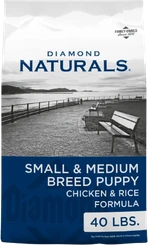
2 · Best Dachshund Puppy Food
Dry kibble · Puppy growth · 453 kcal/cup
This Dachshund puppy food is a dry kibble formulated specifically for small and medium breed growth. The grain-inclusive recipe provides a dedicated puppy option with a compact dry format and an everyday feeding profile designed around the needs of younger dogs.
Protein DMB
35.6%
Fat DMB
24.4%
Estimated Carbs DMB
27.2%
What we like
• The adequacy statement covers all life stages while excluding only the growth of large-size dogs, which does not conflict with its use for Dachshund puppies.
• Chicken is the first ingredient, followed immediately by chicken meal as another clearly named animal ingredient.
• Salmon oil is specifically identified as a source of DHA in the ingredient list.

3 · Best Wet Food for Dachshunds
Wet entrée · Small breeds · 92 kcal/bowl
Chosen as the best wet dog food for Dachshunds, this grain- and gluten-free recipe is made for adult small-breed dogs and comes in a soft, portioned wet format. Its Petite Pot Pie style provides an alternative to dry kibble for owners who prefer a moisture-rich meal with a softer, stew-like presentation.
Protein DMB
44.4%
Fat DMB
16.7%
Estimated Carbs DMB
20%
What we like
• The current product label states that the recipe meets AAFCO nutrient profiles for maintenance of adult dogs.
• Deboned chicken is the first ingredient, with chicken liver adding another clearly identified animal ingredient.
• Chicken broth and turkey broth provide two specifically named animal-derived liquids rather than an unspecified broth.

4 · Best Food for Senior Dachshunds
Dry kibble · Small seniors · 383 kcal/cup
This senior dog food option is a grain-inclusive dry kibble designed for small-breed dogs over seven years old and up to 23 pounds. It provides an everyday feeding format aimed at smaller dogs entering their later life stage, without positioning the recipe as a therapeutic or prescription diet.
Protein DMB
32.2%
Fat DMB
18.3%
Estimated Carbs DMB
27.2%
What we like
• Chicken is the first ingredient, with glucosamine hydrochloride and chondroitin sulfate also included in the formula.
• DHA, vitamin E and beta-carotene are specifically disclosed, while fructooligosaccharides and dried beet pulp provide identifiable prebiotic and fiber ingredients.
• The S-shaped kibble is designed to encourage chewing as part of Eukanuba’s DentaDefense approach to tartar control.
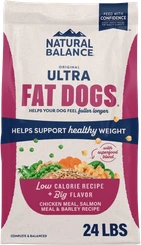
5 · Best for Weight Management
Dry kibble · Weight control · 315 kcal/cup
Selected as our weight-management food for Dachshunds, this grain-inclusive dry recipe is formulated for adult dogs that need a more calorie-conscious everyday option. It combines chicken and salmon in a conventional kibble format and is intended for routine feeding when portion control and body-condition management are particular priorities.
Protein DMB
28.9%
Fat DMB
8.3%
Estimated Carbs DMB
42.2%
What we like
• The recipe uses several concentrated fiber sources, including dried beet pulp, pea fiber, oat fiber, tomato pomace and inulin.
• L-carnitine is specifically included and declared by the manufacturer as part of the weight-management formulation.
• Chicken meal and salmon meal are the first two ingredients, providing two clearly named animal-protein sources.
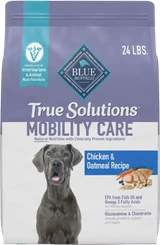
6 · Best for Mobility Support
Dry kibble · Mobility support · 395 kcal/cup
Chosen as our mobility-support dog food for Dachshunds, this grain-inclusive dry formula is made for adult dogs and fits routine daily feeding. It provides a conventional kibble option for owners looking for mobility-focused nutrition in a complete everyday diet rather than a therapeutic food.
Protein DMB
28.6%
Fat DMB
16.5%
Estimated Carbs DMB
38.5%
What we like
• Glucosamine and chondroitin are included, with shrimp meal specifically identified as a source of both compounds.
• Fish oil is included as a specifically identified source of EPA for the formula’s mobility-focused positioning.
• LifeSource Bits provide a separate blend of antioxidants, vitamins and minerals selected by the manufacturer’s nutrition team.

7 · Best for Dental Support
Dry kibble · Dental care · 3422 kcal/kg
Chosen as a dental-support food for Dachshunds, this dry adult formula is made specifically for small and mini breeds. The grain-inclusive recipe provides a focused oral-care option for owners who want dental-oriented kibble while staying within a conventional small-breed adult feeding format for everyday meals.
Protein DMB
22.9%
Fat DMB
13.4%
Estimated Carbs DMB
42%
What we like
• Hill’s uses an interlocking-fiber kibble technology designed to scrub the tooth surface during chewing and reduce plaque and tartar buildup.
• AAFCO feeding tests substantiate the formula as complete and balanced nutrition for maintenance of adult dogs.
• Chicken fat, soybean oil and fish oil provide several clearly identified fat sources in the current ingredient list.
Frequently Asked Questions
The best dog food for a Dachshund is complete and balanced for its life stage and easy to portion for a small dog. Calorie control deserves particular attention because seemingly minor extras can represent a meaningful share of a Dachshund’s daily energy intake.
Not necessarily. A small-breed formula can offer a manageable kibble size and feeding profile, but the essential requirement is complete and balanced nutrition for growth. For a Dachshund puppy, the food should be appropriate for its life stage and fed in portions that support steady growth without unnecessary excess.
Measure meals instead of estimating by eye, then watch rib coverage, waist and weight trends over time. A rounded silhouette or disappearing waist signals the need to review total calories, including dental chews and training rewards, before simply changing brands.
Keeping a Dachshund lean can help avoid unnecessary load on its frame, but weight-control food should be viewed as one tool for managing calorie intake rather than protection against back problems. Portion size, treats and overall body condition still matter, and persistent pain or movement changes should be discussed with a veterinarian.
For an older Dachshund, prioritize calories that help maintain a lean body condition, enough protein to support muscle, and a texture the dog can comfortably eat. Reduced activity may call for smaller portions, but age alone does not automatically mean that a senior dog needs a low-protein diet.
Final Takeaway
Food choice for a Dachshund should account for age, activity, body condition, and the practical need to avoid unnecessary weight gain. This page offers distinct choices for growth, maintenance, senior feeding, wet-food use, calorie control, mobility, and dental priorities; no single selection is meant to cover every one of those goals.
Because excess body weight adds load to a Dachshund’s long-backed frame, accurate portions and regular body-condition checks deserve particular attention. Recalculate intake when exercise or treats change, confirm that the current label fits the correct life stage, and switch formulas progressively. Pain, unexplained weight change, or a therapeutic-diet need should be discussed with a veterinarian.
Related Reading
Editorial Note
In producing the Best Dog Food for Dachshunds guide, DogFoodNet reviews the complete label rather than relying on front-of-bag messages. Ingredient order, guaranteed analysis, calories per serving, nutritional adequacy, manufacturer disclosures, package size, feeding directions, availability and price all inform the editorial assessment. Nutrients may be recalculated on a dry-matter basis when comparing foods with unlike moisture contents.
Choices are organized for Dachshunds at different life stages and activity levels, with attention to portion control, manageable calorie density, small-dog feeding practicality, wet versus dry format and individual ingredient tolerance. Maintaining an appropriate body condition is particularly relevant for a breed with a long frame, but no food is selected solely because it displays a Dachshund or uses breed-focused marketing.
DogFoodNet has not independently analyzed these recipes in a laboratory or tested them through controlled feeding, and the guide is not a substitute for a veterinarian’s assessment. Product formulations, availability, packages and prices may change, making the current label the final reference. The site may receive affiliate compensation when a reader makes a qualifying purchase; payment does not determine inclusion, category assignment or the substance of the analysis.
Questions, Suggestions, or Corrections?
If you notice an error or have feedback on this page, feel free to get in touch.