Breed-Specific Dog Food Guide
Best Dog Food for German Shepherds: 7 Choices for Different Needs
Feeding needs can vary depending on activity, size, age, appetite, and response to particular ingredients. In this Best Dog Food for German Shepherds guide, we compare seven options designed to cover a broad range of feeding needs.
- Author: Samuel James
- Published: August 26, 2026

Affiliate disclosure: DogFoodNet may earn a commission when you purchase through links on this page, at no additional cost to you. Affiliate relationships do not influence how products are selected, compared or evaluated.
Our Picks at a Glance
Our Picks, Explained
Each option includes a concise editorial overview, key dry-matter values, practical strengths, and links to check the price or read the complete product review.
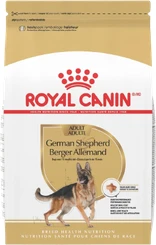
1 · Overall Best for German Shepherds
Dry kibble · German Shepherds · 321 kcal/cup
Chosen as our best overall pick, this dry kibble is intended for purebred adults from 15 months onward. Its grain-inclusive, everyday format is aimed at normally active German Shepherds rather than dogs needing a therapeutic diet.
Protein DMB
24.4%
Fat DMB
18.9%
Estimated Carbs DMB
41.7%
What we like
• The recipe pairs specific fibers with proteins Royal Canin identifies as highly digestible.
• Glucosamine hydrochloride and chondroitin sulfate are both included.
• Specially designed for German Shepherds.

2 · Best German Shepherd Puppy Food
Dry kibble · Large puppies · 414 kcal/cup
The lamb-and-rice dry kibble is made for large- and giant-breed puppies, including growing German Shepherds expected to mature at a substantial size. The grain-inclusive recipe has an everyday feeding profile and conventional kibble format, making it a straightforward large-breed puppy option.
Protein DMB
30%
Fat DMB
16.7%
Estimated Carbs DMB
40.6%
What we like
• The adequacy statement covers all life stages, including the growth of large-size dogs.
• Lamb is the first ingredient, followed immediately by lamb meal.
• Calcium and phosphorus are both declared in the guaranteed analysis.
• The formula identifies multiple probiotic strains and includes dried chicory root as a prebiotic ingredient.

3 · Best Wet Food for German Shepherds
Wet stew · Lamb-beef recipe · 332 kcal/can
For owners looking for a wet-food option, this canned lamb-and-beef stew combines chunky pieces with a savory gravy. It is positioned across breed sizes, giving adult German Shepherds a moisture-rich dog food option with a familiar meal-style texture, a grain-inclusive recipe, and an alternative to an exclusively dry feeding routine.
Protein DMB
44.4%
Fat DMB
22.2%
Carbs DMB
16.7%
What we like
• The current ingredient list contains no meat by-products or artificial preservatives.
• Apples, carrots, and spinach provide recognizable plant ingredients.
• Zinc, iron, copper, and manganese appear in specifically named proteinate forms.

4 · Best Food for Senior German Shepherds
Dry kibble · Large seniors · 376 kcal/cup
Selected as our senior dog food option, this chicken-based dry kibble is intended for large dogs over seven years old and weighing more than fifty-five pounds. Its grain-inclusive recipe and crunchy everyday format suit older German Shepherds that remain active.
Protein DMB
28.3%
Fat DMB
12.2%
Estimated Carbs DMB
35.6%
What we like
• Glucosamine hydrochloride and chondroitin sulfate are included for nutritional joint support.
• DHA, vitamin E, and beta-carotene are all specifically disclosed.
• Fructooligosaccharides provide a named prebiotic alongside dried beet pulp.
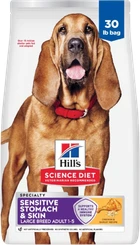
5 · Best for Sensitive Digestion
Dry kibble · Sensitive stomach · 393 kcal/cup
This large-breed chicken-and-barley dry kibble is our sensitive-digestion food choice for German Shepherds. It is intended for adult dogs, including those described as having sensitive stomachs or skin. It uses a conventional grain-inclusive recipe in a larger bite size.
Protein DMB
22.2%
Fat DMB
14.4%
Estimated Carbs DMB
50.6%
What we like
• Prebiotic fiber is included as the formula’s primary digestion-related feature.
• AAFCO feeding tests substantiate its complete-and-balanced maintenance nutrition.
• Dried beet pulp provides an identifiable additional fiber ingredient.
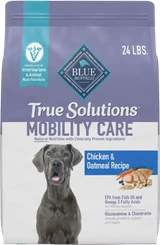
6 · Best for Joint Support
Dry kibble · Mobility support · 395 kcal/cup
This adult chicken-and-oatmeal dry kibble is our joint-support dog food choice. It is positioned for adult dogs of all breed sizes and uses a grain-inclusive recipe suitable for routine feeding. For German Shepherds, its role is nutritional mobility support within a complete daily diet, not treatment for arthritis, injury, or persistent pain.
Protein DMB
28.6%
Fat DMB
16.5%
Estimated Carbs DMB
38.5%
What we like
• Glucosamine and chondroitin are included, with shrimp meal identified as a source.
• Fish oil provides EPA, which is specifically declared by the manufacturer.
• The manufacturer’s LifeSource Bits supply a separate blend of antioxidants, vitamins, and minerals.

7 · Best for Skin and Coat Support
Dry kibble · Sensitive stomach · 404 kcal/cup
Chosen for skin and coat support, this salmon-and-rice dry kibble is formulated for adult large-breed dogs, including German Shepherds. The large-breed formula has a grain-inclusive profile and is designed for everyday feeding, giving owners a nonprescription option when they want a clearly identified salmon recipe rather than a veterinary diet.
Protein DMB
29.5%
Fat DMB
13.6%
Estimated Carbs DMB
42.6%
What we like
• Sunflower oil provides omega-6 fatty acids, while linoleic acid is separately declared.
• The recipe is made without corn, wheat or soy, artificial colors or artificial flavors.
• Glucosamine hydrochloride is included as an additional large-dog nutritional feature.
Frequently Asked Questions
The best dog food for a German Shepherd should fit a large, athletic dog’s life stage without supplying more energy than its real workload requires. Look for complete nutrition, transparent calorie information and portions that maintain visible waist definition and strong muscle condition.
German Shepherd puppies need a formula specifically adequate for growth of large-size dogs. Controlled growth is the goal: use the label’s measured portions, avoid free-feeding and do not add calcium or mineral supplements to an already complete puppy diet unless prescribed.
A police, sport or herding German Shepherd doing sustained work may benefit from higher energy density, whereas a normally active family dog may not. Increase calories in response to workload, weight and recovery rather than choosing the highest protein and fat percentages by default.
A stable recipe with well-defined ingredients may make tolerance easier to judge, but chronic loose stool is not a reason to keep cycling through retail foods. Veterinary assessment is important because parasites, pancreatic problems and intestinal disease can resemble ordinary food sensitivity.
Joint-focused formulas may include fish oil, glucosamine or chondroitin, but their most dependable nutritional advantage may be helping owners maintain a lean body condition. Lameness, stiffness or difficulty rising needs diagnosis; food cannot correct hip dysplasia or another structural disorder.
Final Takeaway
German Shepherd feeding needs can shift markedly between puppyhood, a moderately active home life, demanding work, and the senior years. The selections on this page separate those situations while also considering wet-food preference, digestive tolerance, mobility, and skin-and-coat needs. They should be treated as purpose-specific options, not as seven interchangeable foods.
Use the manufacturer’s directions as a starting range and adjust from weight trend, body condition, and workload. For puppies, confirm that the adequacy statement covers growth of large-size dogs. Introduce a new recipe in stages, and involve your veterinarian when persistent digestive, skin, or movement concerns—or an existing diagnosis—make routine feeding advice insufficient.
Related Reading
Editorial Note
DogFoodNet assembled the Best Dog Food for German Shepherd guide after checking current product labels and manufacturer materials for ingredient composition, calorie density, guaranteed analysis, life-stage adequacy, feeding guidance, package sizes, availability and retail cost. Where moisture varies substantially among products, dry-matter percentages help place protein, fat and estimated carbohydrate values on the same comparative footing.
The shortlist is built around relevant German Shepherd feeding circumstances, including controlled large-breed growth, adult maintenance, active lifestyles, senior needs, digestive sensitivity, joint support and skin-and-coat considerations. The food’s documented purpose, calorie profile and suitability for the intended life stage matter more than shepherd imagery or generalized performance language.
This process does not include independent laboratory testing, kennel feeding experiments, physical examinations or medical diagnosis. Individual dogs may respond differently, especially when health conditions or suspected adverse food reactions are involved, so veterinary guidance remains important. Labels, recipes, prices and stock may change without notice. Readers should confirm the current package information. Qualifying affiliate purchases may support DogFoodNet.
Questions, Suggestions, or Corrections?
If you notice an error or have feedback on this page, feel free to get in touch.