Wet Dog Food Review
Blue Buffalo Blue’s Stew Wet Dog Food Review
An editorial review of blue buffalo blue’s stew wet dog food covering ingredients, nutrient profile, recipe quality, AAFCO suitability, cost, recalls and overall value.
- Author: Samuel James
- Published: May 31, 2026
No. of Recipes
3
Recipe Reviewed
1
Line Rating
4.3 / 5
Rating Range
4.2 to 4.4
As an affiliate, we may earn a commission from qualifying purchases made through links on this page, at no extra cost to you.
Ingredient Analysis
Nutrient Analysis
Cost Analysis
Recall Check
On This Page
Products List
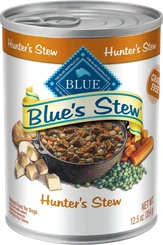
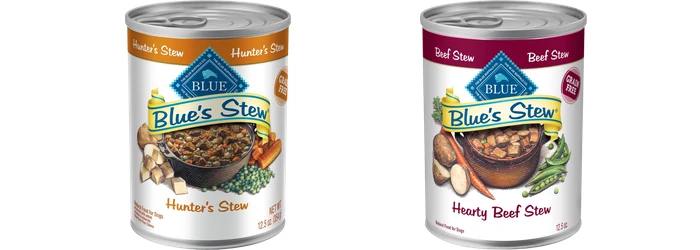
This dog food line has 3 recipes. Reviewing all isn’t possible. The review of Hunter's Stew Recipe shows the quality, nutrition, and composition of the whole line.
Ingredients
Duck, Duck Broth, Water, Chicken, Dried Egg, Salmon, Turkey Liver, Peas, Carrots, Potatoes, Potato Starch, Guar Gum, Sodium Phosphate, Potassium Chloride, Natural Flavor, Salt, Calcium Carbonate, Zinc Amino Acid Chelate, Iron Amino Acid Chelate, Choline Chloride, Vitamin E Supplement, Copper Amino Acid Chelate, Manganese Amino Acid Chelate, Sodium Selenite, Thiamine Mononitrate (Vitamin B1), Cobalt Amino Acid Chelate, Niacin Supplement (Vitamin B3), Calcium Pantothenate (Vitamin B5), Vitamin A Supplement, Riboflavin Supplement (Vitamin B2), Biotin (Vitamin B7), Vitamin B12 Supplement, Potassium Iodide, Pyridoxine Hydrochloride (Vitamin B6), Vitamin D3 Supplement, Folic Acid (Vitamin B9).
Ingredients are listed in descending order by pre-cooked weight, which can affect how ingredients appear near the top of the list.
Ingredient Analysis
This review of Blue Buffalo Blue’s Stew Wet Dog Food highlights the first five items as the formula’s primary ingredients.
Primary Ingredients
Duck
Duck is a clearly named poultry ingredient. In dog food, it can contribute animal-based protein for normal tissue maintenance and repair, while its natural fat may add energy and flavor. Depending on the dog’s past diet, duck may also be considered a less common or novel protein choice. Unless the label specifies “boneless” or “deboned,” duck may include accompanying bone as part of the ingredient.
Why It Matters
A higher placement can suggest meaningful duck content, and duck may help when a less common animal protein is preferred.
Duck Broth
Duck broth is a liquid ingredient made by cooking poultry bones, parts, or muscle tissue. It mainly adds moisture and flavor, and moisture matters because water is essential in the diet.
Why It Matters
It can add moisture and taste, but it should not be read like meat or meal.
Water
Water is commonly used in wet dog food to add moisture, help ingredients mix evenly, and support the soft texture expected in canned, pouch, or tray-style foods. It does not add protein, fat, or major nutrients by itself, but it can make the food easier to chew and more palatable.
Why It Matters
In wet food, water mainly supports moisture, texture, and processing. Its importance depends on the full recipe.
Chicken
Chicken is a named poultry ingredient. It can add protein that helps build and renew body tissues, along with fat that helps supply energy. Because it is a fresh ingredient and labels are ordered by weight, its place on the list may look stronger than its final dry share after cooking.
Why It Matters
A high spot suggests real chicken content, but fresh chicken can look heavier on the label than after processing.
Dried Egg
Dried egg is an egg ingredient with moisture removed. It can add egg-based animal protein, fat, and nutrients naturally found in eggs. Because it is dried, it is more concentrated than fresh egg by weight.
Why It Matters
It can add concentrated egg-based nutrition, but its real contribution depends on placement and amount used in the recipe.
Secondary Ingredients
This Blue Buffalo Blue’s Stew Wet Dog Food Review looks at the next four items as the formula’s secondary ingredients.
Salmon
Salmon is a named fish ingredient. It can provide protein that helps build and renew body tissues, along with fat that helps supply energy. Fish ingredients may also contribute omega-3 fatty acids. Because ingredient lists are ordered by weight, fresh salmon can look heavier on the label than after processing.
Turkey Liver
Turkey liver is a named organ ingredient. It can add animal protein that helps build and renew body tissues, along with natural nutrients found in liver, such as certain vitamins, minerals, and fatty acids. It is best read as a nutrient-dense organ ingredient, not just a flavor addition.
Peas
Peas are pulse ingredients. They may contribute starch for energy, plant protein, and fiber. Because peas contain several nutrients, they can play more than one role in a formula. Their value depends on amount, placement, and how they fit with the rest of the recipe.
Carrots
Carrots are a vegetable ingredient. They can provide carbohydrates and may contribute fiber. Carrots are also known sources of beta-carotene, so in dog food they are usually better read as a supporting plant ingredient. Their overall importance still depends on how much is used in the formula.
Other Notable Ingredients
This Blue Buffalo Blue’s Stew Wet Dog Food Review also notes other notable ingredients that appear further down the list.
Potatoes
Potatoes are a plant-based carbohydrate ingredient. They can add starch that may contribute calories and help support texture in wet food. When properly cooked, potato is also sometimes used as a gluten-free carbohydrate option in certain feeding situations. Its overall role depends on how much is used, where it appears in the ingredient list, and the full recipe.
Potato Starch
Potato starch is a carbohydrate ingredient made from potatoes. In dog food, it may add digestible starch and can also help support texture, thickness, and structure. Its role depends on where it appears in the ingredient list.
Ingredients Takeaway
This recipe appears to build its protein base around named animal ingredients, with duck, chicken, dried egg, salmon, and turkey liver giving the formula a clear animal-focused foundation.
It also includes peas, carrots, potatoes, and potato starch for plant-based carbohydrate and texture support, along with guar gum and a conventional vitamin-mineral premix.
Overall, the ingredient profile appears well-defined.
Nutrient Sources
We analyzed this Hunter’s Stew Recipe to identify the likely ingredient sources of protein, fat, carbohydrates, and fiber, along with its likely vitamin and mineral contributors.
Protein Sources
Protein appears to come mainly from named animal ingredients, led by duck, chicken, dried egg, salmon, and turkey liver. Because duck appears first, it is likely an important contributor, although fresh meats can lose moisture during processing. Peas may add some plant-based protein, but they do not appear to be the primary protein base.
Duck
Chicken
Dried Egg
Salmon
+ others
Fat Sources
Fat appears to be supplied mainly by the animal ingredients, especially duck, chicken, dried egg, salmon, and turkey liver. The recipe does not list a separate named oil, so the fat profile seems to rely mostly on ingredients already contributing protein. Salmon may also add some naturally occurring marine fat.
Duck
Chicken
Dried Egg
Salmon
+ others
Carbohydrate Sources
Carbohydrates appear to come mainly from peas, potatoes, and potato starch, with carrots adding a smaller plant-based contribution. These ingredients likely provide much of the recipe’s starch and plant matter, though the exact carbohydrate level cannot be determined from the ingredient list alone.
Peas
Potatoes
Potato Starch
Carrots
+ others
Fiber Sources
Fiber is likely supplied mainly by peas, carrots, and potatoes, with guar gum also contributing as a thickening ingredient that may add some soluble fiber. These plant ingredients may help support stool quality, but their impact depends on the full recipe and inclusion amounts.
Peas
Carrots
Potatoes
Guar Gum
+ others
Vitamins: Likely Food-Based Sources
Naturally occurring vitamins may come from turkey liver, dried egg, duck, chicken, salmon, peas, and carrots. However, the recipe also includes added vitamin supplements such as vitamin E supplement, vitamin A supplement, several B vitamins, and vitamin D3 supplement. This suggests the formula does not appear to rely on food ingredients alone for its vitamin content.
Minerals: Likely Food-Based Sources
Naturally occurring minerals may come from duck, chicken, salmon, turkey liver, dried egg, peas, carrots, and potatoes. Added mineral sources such as zinc amino acid chelate, iron amino acid chelate, copper amino acid chelate, manganese amino acid chelate, sodium selenite, potassium iodide, calcium carbonate, and potassium chloride also appear in the list. This suggests added minerals likely supply an important share of the mineral profile.
Ingredient Concerns
Things to consider
What Stands Out Positively
Duck appears first on the ingredient list, followed by duck broth, chicken, dried egg, salmon, and turkey liver, which suggests the recipe includes several clearly named animal-based ingredients. Some owners may appreciate that the animal ingredients are specific rather than broadly described.
What May Concern Some Owners
From an ingredient-list perspective, natural flavor may be viewed cautiously by buyers who prefer simpler wet food formulas with more clearly identified ingredient sources.
Overall Concern Level for Blue Buffalo Blue’s Stew Wet Dog Food
Minor. Based on the label alone, the ingredient list appears broadly conventional for a wet dog food, with named animal ingredients placed prominently and the main concern limited to the less specific labeling of natural flavor.
Nutrient Analysis
We analyzed this recipe using guaranteed analysis, dry matter basis, and calorie basis to better understand its macronutrient profile.
Protein (Dry Matter Basis)
41.7%
Fat (Dry Matter Basis)
22.2%
Carbohydrates (Dry Matter Basis)
19.4%
Fiber (Dry Matter Basis)
5.6%
Method of Analysis | Protein | Fat | Carbs |
|---|---|---|---|
Guaranteed Analysis | 7.5% | 4% | 3.5% |
Dry Matter Basis | 41.7% | 22.2% | 19.4% |
Calorie Basis | 36.2% | 46.9% | 16.9% |

Interpretation: This recipe is high in protein, moderately high in fat, and low in carbohydrates on a dry matter basis.
This interpretation is based on our editorial comparison tool and is intended for general review purposes only. It is not an official product claim or a statement from the manufacturer.
AAFCO and FEDIAF Comparison
This section compares the recipe’s estimated dry matter protein and fat levels with AAFCO and FEDIAF minimums for adult maintenance.
Adult Maintenance
Standard | Protein (min.) | Fat (min.) |
|---|---|---|
AAFCO | 18.0% | 5.5% |
FEDIAF (110 kcal/kg) | 18.0% | 5.5% |
FEDIAF (95 kcal/kg) | 21.0% | 5.5% |
Recipe Estimate | 41.7% | 22.2% |
Based on the estimated dry matter values, this recipe appears to exceed both the AAFCO and FEDIAF adult maintenance minimums for protein and fat.

"BLUE Hunter's Stew Food for Dogs is formulated to meet the nutritional levels established by the AAFCO Dog Food Nutrient Profiles for maintenance."
What that statement means
This statement indicates that BLUE Hunter’s Stew Food for Dogs is formulated to meet AAFCO nutrient profile levels for maintenance.
From the label, this appears to mean the food is intended for adult dogs rather than for growth, gestation, or lactation.
The wording also suggests the adequacy claim is based on formulation to recognized nutrient standards, not feeding trials. That does not necessarily say more about ingredient quality, but it does clarify the food’s intended nutritional use.
Cost Analysis
We compared the available buying options to understand upfront cost, cost per ounce, and overall value of Blue’s Stew Wet Dog Food.
Best Value Highlight
12.5-oz can, case of 12 is the only visible buying option for Hunter’s Stew Recipe, so it cannot be compared against another pack size for value. Based on the available pricing, this option shows an upfront cost of $44.28, with a listed cost of $0.30 per ounce and $3.69 per can.
Price Interpretation
The pricing shown suggests a simple buying structure for this recipe, with only one case-size option available. Because no smaller or larger pack is shown, there is no visible pattern of higher upfront cost versus better long-term value to compare.
Autoship Note
At the time of review, the retailer listed an Autoship offer of 25% off the first order, with future Autoship orders priced about 5% below the one-time purchase option.
To check the current price, Autoship savings, and availability, use the retailer link at the bottom of the screen.
Pros and Considerations
Pros
• Named animal ingredients form a clear protein foundation
• Duck appears first on the ingredient list
• High-protein dry matter profile
• Salmon and turkey liver add notable animal-based variety
Cons
• Natural flavor is less specifically identified
Recall and Safety
Recall History
We found no FDA recall notices for this brand in FDA Recalls & Withdrawals records reviewed from 2019 to present.
Last Checked
May 31, 2026
Recall Monitoring Note
Recall status may change over time as new FDA notices are announced.
Stay Updated on Dog Food Recalls
Join our recall alerts list to get notified when new dog food recall notices are announced.
Our Rating
Reviewed Recipe Rating
4.4 / 5
Editorial score for the specific recipe reviewed on this page.
Editorial Verdict: Very Good
87 / 100
Ingredient Quality
4.5 / 5
Ingredient Safety
4.5 / 5
Processing
3.5 / 5
What influenced this recipe score
• Multiple named animal proteins appear near the top of the ingredient list, supporting the ingredient-quality assessment.
• Natural flavor was noted as a lower-clarity ingredient and remains the main label-based consideration.
• Protein appears strong for a wet food, while carbohydrate content is relatively low on a dry matter basis.
Product Line Average: 4.3 / 5
This reflects the average editorial score across reviewed recipes in this dog food line.
This rating reflects our independent editorial opinion of the specific recipe reviewed, based on the information available at the time of publication. It is not intended to disparage the brand or company, and other reviewers may reasonably reach different conclusions.
Final Verdict
Who This Food May Suit
This recipe may suit owners looking for a wet food with several clearly named animal ingredients, including duck, chicken, dried egg, salmon, and turkey liver. It may also appeal to buyers who value a high-protein, lower-carbohydrate profile and an adult-maintenance AAFCO statement.
Who May Want an Alternative
Buyers looking for a formula intended for growth, gestation, or lactation may prefer an alternative.
Overall Editorial Verdict
Overall, Hunter’s Stew Recipe earns a positive editorial assessment, with a 4.4 out of 5 rating and a “Very Good” verdict. Its main strengths are the animal-focused ingredient base, strong dry matter protein level, and relatively low carbohydrate estimate for a wet food. The less-specific natural flavor remains the main ingredient-list point to consider.
This review is for informational purposes and is not a substitute for individual veterinary advice.
More Blue Buffalo Reviews
More Formulas to Consider
Same flavor alternative
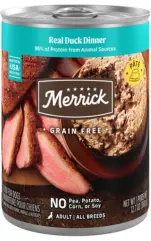
Grain-free duck pate with wholesome animal protein.
Different Flavor Option
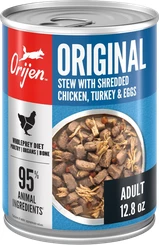
Protein-rich chicken, turkey, and egg wet stew.
More Reviews

Editorial Note
Samuel James
Independent editorial dog food reviews
Affiliate-supported content
DogFoodNet provides clear, editorial dog food reviews that look beyond marketing claims. Each review evaluates ingredient quality, nutrition data, and pricing to help you understand what a recipe may offer, where it may fall short, and whether it appears to fit your dog’s needs and budget.
Focus: ingredients, nutrition, cost, and buyer guidance
Independent editorial review process
Affiliate disclosure: commissions may be earned from qualifying purchases
Have a question about this review? You can contact us anytime with your questions, feedback, or suggestions.