Dog Food Label Guide
Common Food Allergens in Dog Food: Ingredients That May Trigger Reactions
If your dog is always scratching, chewing their paws, or dealing with frequent stomach problems, their diet could be part of the problem. Many pet parents are unaware of the fact that giving the same food to their pet for a long time can develop food allergies.
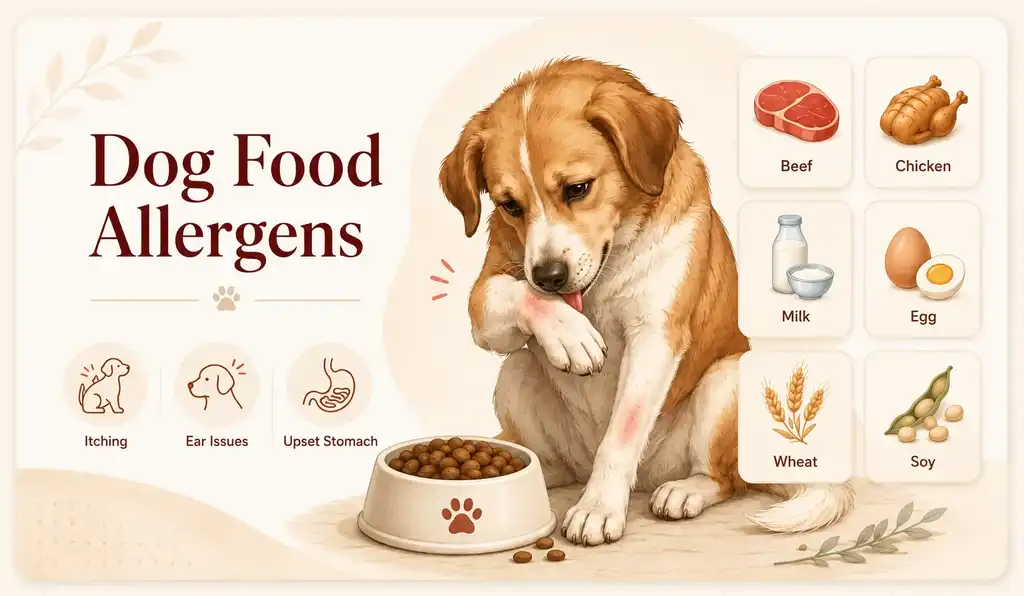
Food allergies are only one of many common dog diseases that can cause digestive upset or recurring skin problems. Because many conditions share similar symptoms, a veterinary examination is the best way to identify the actual cause before starting treatment.
Main Issue
Food Reactions
Common Triggers
Protein Sources
Diagnosis
Elimination Diet
Key Strategy
Avoid Trigger
On This Page
Food Allergies in Dogs - An Overview
True food allergy is an immune reaction. The dog’s body misinterprets a normal ingredient for a threat and activates its defense system to produce antibodies. Itching, redness and inflammation are caused by that overreaction. Food allergies are rare and occur in 0.2 percent of dogs.
Note that food allergies in dogs are often mistaken for food intolerance. Unlike food allergy, food intolerance has nothing to do with the immune system. However, in food intolerance the dog’s digestive system simply can’t cope with a specific ingredient, causing it to pass cloudy stool, have gas or vomit, but not an allergic skin reaction.
However, dog food intolerance symptoms are similar to those of food allergies. Both conditions can be diagnosed and treated in a similar manner, but the difference in diagnosis aids treatment expectations.
A List of Common Dog Food Allergens
Most food allergies in dogs are caused by protein sources. Repeated exposure to the same ingredient over time makes it more likely to trigger an allergic reaction in some dogs.
Based on published research, here are some ingredients dogs are allergic to that have been reported to trigger reactions:
Common dog food allergens
Beef
Chicken
Milk
Egg
Wheat
Lamb
Corn
Soy
Rice
Pork
Uncommon dog food allergens
Mutton
Turkey
Rabbit
Herring
Cod
Tuna
Salmon
Chocolate
Kidney bean
Important Note: Research has also linked a small number of dogs to allergies involving mutton, turkey, rabbit, and fish (cod, salmon, tuna, and herring). Some dogs have also been reported to be allergic to kidney beans, and, in one study, chocolate. These ingredients were reported much less frequently than the most common allergens.
Symptoms That Suggest a Food Allergy in Dogs
Food allergies do not look the same in every dog. But the symptoms usually follow a few familiar patterns. Here are the dog food allergy symptoms that suggest food hypersensitivity or intolerance in dogs.
Skin Problems
• Excessive licking / chewing paws
• Itchy/ red or inflamed skin
• Hair loss
• Skin infection
• Ear infection
Gut Problems
• Diarrhea
• Vomiting
• Excessive bloating
• Weight loss
• Lethargy
Anaphylaxis (Uncommon)
• Anaphylaxis is a life threatening allergic reaction that needs emergency veterinary care
Food allergies in dogs can develop at any age. Although they are most often seen in dogs younger than one year. Food hypersensitivity can develop suddenly even if a dog is eating the same food for years without any problem. For that reason, a long history with the same diet does not rule out food as the source of the problem.
Causes of Food Allergies in Dogs
Some ingredients are far more likely to trigger food allergies in dogs than others. This is largely due to the type of proteins they contain and how often dogs eat them. Here are some reasons why dogs develop food allergies.
Complex Protein Structures
Most food allergies in dogs are triggered by proteins rather than carbohydrates or fats. Proteins have complex structures. In some dogs, the immune system mistakes them for harmful invaders instead of harmless nutrients. The result is an immune reaction that leads to inflammation and itching.
Repeated Exposure of Same Ingredient
Dogs are more likely to become allergic to ingredients they eat regularly over a long period. Since beef, chicken, dairy, and wheat are found in many commercial dog foods, they are among the ingredients dogs ingest most often. On the other hand, venison, duck, and other less common protein sources are less likely to trigger allergies because dogs are exposed to them less often.
It is worth noting how allergies typically build up after repeated exposure rather than appearing the very first time a dog eats something new. That is why proteins such as beef, chicken, dairy, and sometimes wheat are among the most common triggers. It is not because these ingredients are naturally more allergenic, but because dogs are exposed to them more often than less common proteins like duck, venison, or rabbit.
Immunological Memory
The immune system remembers that allergen as a threat after recognizing a food allergen. Every time the dog eats it again, the body releases an immune response, leading to food allergy symptoms.
How Veterinarians Diagnose a Food Allergy
Diagnosing a food allergy is not as simple as running a blood test. There are no commercially available tests that can effectively diagnose food allergies in dogs. The best option is a veterinary supervised (hypoallergenic) diet.
Your dog is fed a specially formulated diet for the trial diet period (typically eight to twelve weeks). During the elimination diet, no other food can be given to the dog. That includes no dental chews or treats. This is because even a small amount of another ingredient can make it difficult to point out the exact allergen.
There are two basic diet recommendations that veterinarians usually suggest:
- Hydrolyzed protein diets are proteins that have been chopped up into very small pieces.
- Novel protein diets use a protein and carbohydrate source that has not been fed to your dog before, like venison protein or rabbit.
After the trial, your dog’s regular food is slowly reintroduced. Food allergy can only be identified once the initial diet is reintroduced and any symptoms are reobserved.
Food allergies are critical to diagnose since parasites, environmental allergies, and skin infections may show similar signs and symptoms. Veterinary professionals who want to learn more about evaluating itchy dogs can explore Vet and Tech free CE veterinary webinars on dog allergies for practical diagnostic strategies and case based learning.
Managing a Food Allergy Long Term
There is no cure for food allergies, but they can usually be managed successfully once the trigger ingredient has been identified. The main goal is lifelong avoidance of that ingredient. It involves paying attention to labels for all foods your dog eats, including treats, dental chews, supplements and flavoured medicines.
Taking food out of the diet is the only way to cure the allergy, but some dogs require additional help during their body’s adjustment process.
Depending on your dog’s symptoms, your veterinarian may recommend:
- Anti-itch drugs to keep your dog comfortable while following the elimination diet.
- Antibiotics or antifungal drugs, if a secondary skin or ear infection occurs.
- Omega-3 fatty acid supplements with a diet.
Many dogs may have both food allergies and environmental allergies. For this reason, your veterinarian might also ask if there are any seasonal flare ups, what type of flea control you have in place, or other factors that may be contributing to your dog’s condition before making a diagnosis.
Are Certain Breeds More Prone to Food Allergies?
Dogs of any breed, including mixed breeds, may develop a food allergy. However there are a few breeds that reappear in the data, such as the Labrador Retriever, West Highland White Terrier, Cocker Spaniel, Chinese Shar Pei, Boxer, and Shih Tzu. There is a suspected genetic predisposition, but scientists have not yet figured out why some dogs are affected by the food while others are not.
Final Takeaway
To diagnose food allergies in dogs at the right time, you must observe the symptoms and behavior of your dog. Canine food allergies are very uncommon. But, if your dog is suffering from one, its life is really uncomfortable.
If your dog deals with non-stop scratching, chronic ear infections, or chronic vomiting and diarrhea that regular treatments won’t fix, you should talk to your veterinarian about food allergies.
To confirm food allergy, your vet will recommend starting an elimination diet trial. It is a long process, but it can pinpoint the exact ingredient that is causing food hypersensitivity. And cutting that specific ingredient out completely from your dog’s diet is the only way to manage the allergy.
Following it eliminates the assumption, stops the symptoms at the source, and finally gives your dog relief. But it all starts with the right diagnosis.
Related Reading
Editorial Note
This guide was prepared to help dog owners understand food allergens with more confidence. The goal is not to make every ingredient seem risky, but to explain which ingredients are more commonly reported in food allergy cases and why proper veterinary diagnosis matters.
Questions, Suggestions, or Corrections?
If you notice an error or have feedback on this page, feel free to get in touch.