Dog Food Label Guide
Ingredient Splitting in Dog Food: What It Is and How to Spot It
Ingredient lists can look simple at first glance, but they are not always as straightforward as they seem. This guide explains how ingredient splitting works, why it matters, and how to read a dog food label with more confidence before you buy.
- Author: Samuel James
- Published: October 30, 2025
A dog food can look meat-forward while still relying heavily on split starches, grains, or legumes.
Main Issue
Label Perception
Commonly Split
Grains & Legumes
Legality
Generally Allowed
Key Strategy
Read in Groups
On This Page
What Ingredient Splitting Means
As a careful pet parent, you probably do what most responsible dog owners do: you turn the bag around and read the ingredient panel. You look for real meat, recognizable foods, and a formula that feels worthy of your dog’s bowl. That instinct is good. The problem is that a dog food label can sometimes create a cleaner, more premium impression than the recipe deserves.
Ingredient splitting is one of the ways that happens. It is a labeling practice where one broad ingredient source is divided into several smaller forms and listed separately. Because pet food ingredients are listed by weight before cooking or processing, splitting a heavy ingredient into smaller named parts can make each part appear lower on the label. This may allow a more appealing ingredient, such as chicken, beef, lamb, or salmon, to appear at the top.
The plain-English definition
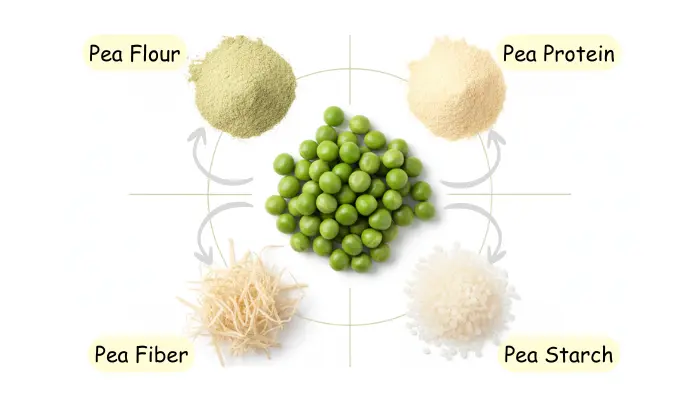
Ingredient splitting means one main ingredient is broken into several smaller listings on the label. For example, a dog food may list “pea flour,” “dried peas,” and “pea protein” separately, but they all come from the same source: peas. When counted together, peas may make up more of the recipe than the label first suggests.
This does not always mean the food is unsafe or badly made. Some recipes use multiple forms of an ingredient for legitimate formulation reasons. But when a label contains several versions of the same grain, starch, or legume near the top, it is worth slowing down. The label may be technically correct while still making the formula look more meat-focused than it really is.
How the Label Trick Works
The key rule behind ingredient splitting is simple: ingredients are listed in descending order by weight. In other words, the heaviest ingredient goes first, the next heaviest comes second, and so on. That sounds transparent, but there is a catch. Each named ingredient is weighed and listed separately.
Imagine a cookie recipe with two cups of white flour, one and a half cups of chocolate chips, and one cup of sugar. If you list the ingredients honestly by total amount, flour comes first. But if the flour is separated into wheat flour, rice flour, and oat flour, each flour type weighs less on its own. Suddenly, chocolate chips can move into the first position even though total flour still outweighs the chocolate.
Why It Matters
The first ingredient can be misleading
Many shoppers use the first ingredient as a shortcut for quality. Brands know this. A label that starts with “chicken” feels more appealing than one that starts with “corn” or “peas.” Ingredient splitting takes advantage of that buying habit by making the first ingredient look more important than it may be in the finished food.
Before splitting
Corn, chicken meal, rice, chicken fat, vitamins and minerals. This looks heavily corn-based because corn is first.
After splitting
Chicken meal, ground corn, corn gluten meal, rice bran, corn bran. Chicken meal now appears first, even though total corn may still dominate.
This is why the ingredient list should be read as a recipe, not as a simple ranking contest. The first ingredient matters, but the pattern of the first five to ten ingredients often tells the better story.
Common Examples
Ingredient splitting usually appears around carbohydrate sources, plant proteins, and ingredients that have several marketable names. Once you know the common patterns, they become much easier to recognize.
Corn splitting
Corn may appear as ground corn, corn gluten meal, corn flour, or corn bran. Each one can be listed separately, but together they may represent a large part of the food.
Ground corn
Corn gluten meal
Corn bran
Rice splitting
Rice-based ingredients can include brewers rice, rice flour, brown rice, white rice, or rice bran. Seeing several of these close together is a clue to group them mentally.
Brewers rice
Rice flour
Brown rice
White rice
Rice bran
Pea and legume splitting
Grain-free recipes often rely on peas, lentils, chickpeas, and beans. A label may show pea flour, pea protein, pea starch, lentils, and chickpeas all in the upper half.
Pea flour
Pea protein
Pea starch
Potato splitting
Potato ingredients can be split into dried potatoes, potato protein, potato starch, and sweet potatoes. These are not identical nutritionally, but they should still be evaluated as a group.
Potato protein
Potato starch
Dried potatoes
Sweet potatoes
Splitting vs. Substitution
Ingredient splitting is sometimes confused with ingredient substitution, but they are not the same thing. Splitting is mostly about presentation. It separates related ingredients so the label order looks more appealing. Substitution is about changing the recipe itself, usually by replacing a more expensive ingredient with a cheaper one.
Ingredient splitting
A formula uses several forms of the same ingredient family, such as peas, pea protein, and pea flour. The issue is how the label shapes perception.
Ingredient substitution
A formula replaces a more costly ingredient with a cheaper alternative, such as relying more heavily on plant protein instead of animal-based protein.
Both can affect what you think you are buying. The difference is that splitting changes how the recipe appears, while substitution changes the actual ingredient strategy. A food can also use both at the same time, which is why label reading should never stop at the front of the bag.
Why It Matters for Your Dog
Ingredient splitting is not just a marketing issue. It can affect how you judge protein quality, how easily you spot allergens, and whether the food is worth the price being charged.
It can make protein quality look better than it is
Dogs need well-balanced nutrition, and animal-based proteins often provide a strong amino acid profile. When a label starts with a fresh meat ingredient, it can feel reassuring. But fresh meat contains a lot of moisture before processing. After cooking, much of that water is removed, which means its contribution to the food’s final dry matter content may be smaller than the label order suggests.
Meanwhile, plant-based ingredients such as peas, lentils, corn gluten meal, or potato protein may help raise the listed protein percentage. That does not automatically make the food poor quality, but it does mean you should look at where the protein is coming from, not just how much crude protein appears on the guaranteed analysis.
It can hide ingredients your dog does not tolerate
If your dog has sensitivities, splitting can make label reading more frustrating. You may avoid a food that lists corn first, but still choose one that contains ground corn, corn gluten meal, and corn bran lower down. For a sensitive dog, those smaller entries still matter.
It can make an average formula feel premium
Premium packaging, rustic ingredient names, and a meat-first label can create a strong impression. But if the food is built mostly around inexpensive starches or plant proteins, you may be paying a premium price for a more ordinary recipe. The goal is not to avoid every grain or every legume. The goal is to understand the formula honestly.
A label can be legal and still require careful reading. The best approach is to look beyond the first ingredient and evaluate repeated ingredient families in the top portion of the list.
How to Spot Ingredient Splitting
The easiest way to catch ingredient splitting is to stop reading the label as a straight line and start reading it in groups. You do not need to be a veterinary nutritionist to notice patterns. You only need to slow down and ask a few practical questions.
Look at the first ten ingredients. The first five are important, but the first ten often reveal the real structure of the formula.
Group related ingredients together. Count corn with corn, rice with rice, peas with peas, potatoes with potatoes, and so on.
Watch for repeated plant proteins. Ingredients like pea protein, potato protein, corn gluten meal, and lentils can influence the protein number.
Do not rely only on “meat first.” A meat-first label can still be followed by several split carbohydrate or plant-protein ingredients.
Compare the front label with the back label. If the front promises a meat-rich recipe but the ingredient panel is packed with split starches, be cautious.
Check the brand’s transparency. Better brands are usually clearer about formulation, sourcing, feeding trials, and who designs their recipes.
A practical example
If a label reads “deboned salmon, pea flour, dried potatoes, peas, potato protein, lentils,” the salmon looks impressive in first place. But peas appear twice, potatoes appear twice, and lentils add another legume source. When grouped together, the plant-based portion may be more important than the first ingredient suggests.
Why Ingredient Splitting Is Allowed
Ingredient splitting usually exists in a gray area rather than a clear violation. Pet food labels are generally required to list ingredients by their common or usual names in descending order by weight. Since each ingredient is listed separately, related ingredients do not have to be combined under one larger category such as “corn products” or “pea ingredients.”
This creates a loophole. A company can follow the technical rule while still presenting the ingredient order in a way that flatters the product. That is why consumer awareness matters. Regulations can define how labels are written, but they cannot always guarantee that shoppers will understand the full nutritional picture at a glance.
Some brands avoid this tactic because they want long-term trust. Others may use it because the marketing benefit is obvious. A meat-first ingredient panel sells. A grain-first or legume-heavy panel is harder to promote, even when the food itself may be nutritionally adequate.
Final Takeaway
Ingredient splitting is a powerful reminder that dog food labels need context. The first ingredient is not meaningless, but it is not the whole story either. A label can begin with chicken, beef, lamb, or salmon and still rely heavily on split grains, starches, or legumes further down the list.
The good news is that once you know the pattern, it becomes much easier to see. Look for repeated ingredient families. Group similar items together. Pay attention to plant-based proteins. Consider moisture-heavy fresh meats carefully. Most of all, choose brands that make their formulas easy to understand instead of making you decode the label like a puzzle.
The simple rule
Do not ask only, “What is the first ingredient?” Ask, “What are the main ingredient groups in this food?” That one shift can help you see past marketing language and make a better decision for your dog.
Want to check whether your dog’s food may show signs of ingredient splitting? Visit our dog food reviews directory to compare individual recipes and see how their ingredients are listed.
Related Reading
• How to Read a Dog Food Label
• Animal Protein vs. Plant Protein
Editorial Note
This guide was prepared to help dog owners read ingredient labels with more confidence. The goal is not to create fear around every grain, legume, or starch, but to make pet food marketing easier to understand.
Questions, Suggestions, or Corrections?
If you notice an error or have feedback on this page, feel free to get in touch.